Unlocking the Aesthetic: A Deep Dive into the Junk Journal Ephemera Kit
In the world of digital design and tangible crafting, there is a distinct, almost magnetic pull toward the "authentic" and the "aged." We live in an era of crisp vectors and high-definition screens, yet the market craves the tactile, the imperfect, and the nostalgic. This is where the Junk Journal Ephemera Kit steps in—not merely as a set of images, but as a bridge between the digital convenience of modern design and the soulful aesthetic of vintage paper crafts. If you have ever struggled to find design assets that don't look like they were stamped out by a sterile corporate machine, this collection offers a solution that feels handpicked from a dusty antique shop.
The Visual Narrative: Understanding the Ephemera Style
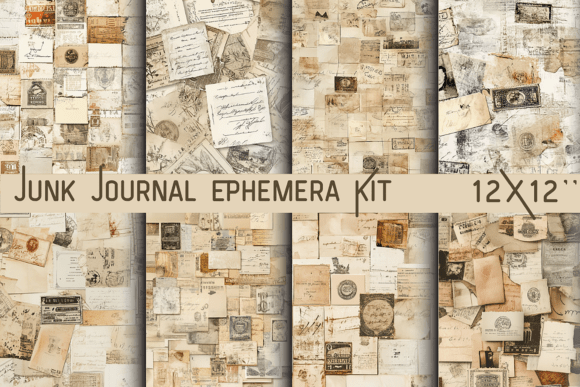
At its core, the Junk Journal Ephemera Kit is defined by its deliberate imperfection and historical resonance. We are not looking at standard stock photography here; we are looking at a curated mood board of the past. The visual characteristics are anchored in a specific color palette: sepia brown, faded beige, antique white, muted grey, and soft cream. These colors do not shout for attention; they whisper. They provide a low-contrast, cohesive background that allows for complex layering without visual chaos.
The "personality" of this kit is inherently tactile. It features elements that mimic physical artifacts: vintage labels, postcards, tickets, tags, and handwritten notes. When you look at a page from this kit, you aren't just seeing a PNG file; you are seeing the ghost of a handwritten letter or the faded ink of a travel ticket. The opaque backgrounds are crucial here. Unlike transparent PNGs which can sometimes float awkwardly, these elements possess a grounding weight, simulating the actual paper they represent. This opacity makes them ideal for collage work, where the stacking of layers creates depth and shadow, essential for achieving that "lived-in" look in scrapbooking and mixed media projects.
Technical Precision for Tangible Results
While the aesthetic is vintage, the execution is thoroughly modern and professional. One of the biggest hurdles in digital crafting is the loss of quality when moving from screen to print. This kit addresses that with 300 DPI resolution and dimensions of 12" x 12" (3600 × 3600 px). For the uninitiated, this is the gold standard for print quality. Whether you are a small business owner printing packaging inserts or a hobbyist creating a physical junk journal, these files are built to withstand enlargement without pixelation. The file sizes (8–18 MB per page) indicate high-fidelity data, ensuring that the subtle textures of the "antique paper clippings" remain visible even in high-quality prints.
Strategic Applications: Beyond the Scrapbook
While the name suggests a niche application, the versatility of the Junk Journal Ephemera Kit extends far beyond traditional scrapbooking. As a designer or content creator, you are constantly hunting for design assets that can elevate a project from generic to bespoke. Here is how this kit fits into broader creative and commercial strategies:
Branding and Identity
For businesses in the lifestyle, coffee, artisanal food, or vintage retail sectors, brand identity relies heavily on texture and warmth. Using elements from this kit in your logo design explorations or packaging design can instantly communicate a sense of history and authenticity. Imagine a bakery using a vintage ticket element from the kit as a loyalty punch card, or a coffee roaster using the sepia-toned labels as part of their bag design. It adds a layer of storytelling that sans-serif minimalism often fails to convey.
Digital Marketing and Social Media
On platforms like Instagram or Pinterest, where visual noise is high, the muted, cohesive palette of this kit acts as a visual rest stop. It is excellent for creating social media graphics that feel curated rather than chaotic. The elements work beautifully as overlays on lifestyle photography or as standalone backgrounds for text-heavy posts. Because the backgrounds are opaque, they provide excellent legibility for typography, allowing you to overlay serif fonts or script fonts that complement the vintage vibe without getting lost in the background noise.
Editorial and Web Design
In editorial design, whether for a digital magazine or a blog, these elements serve as fantastic breakers between text blocks. They can be used as decorative sidebars, chapter dividers, or "About the Author" section backgrounds. In web design, they can be used to create a specific mood for landing pages, particularly for storytelling-based marketing or "Our History" pages. The high resolution ensures that even when cropped for web use, the textures remain sharp, contributing to a professional user experience.
The Psychology of the "Junk" Aesthetic
Why does this style work so well for engagement? It taps into the psychology of nostalgia and the "maker movement." In a digital-first world, there is a growing skepticism toward overly polished, corporate aesthetics. The Junk Journal Ephemera Kit offers a visual language that feels human, handmade, and accessible.
When a brand uses these elements, it signals a value for craftsmanship and history. It suggests that the product or content being presented has depth and roots. This is particularly effective for entrepreneurs and marketers trying to build trust. A sterile white page can feel cold; a page adorned with soft cream textures and handwritten notes feels like a conversation. It lowers the viewer's guard, making them more receptive to the message being conveyed.
Practical Guidance for Implementation
Integrating a kit like this requires a bit of strategy to avoid visual clutter. Here are practical steps for getting the most out of your investment:
- Establish a Hierarchy: Because the elements are opaque and textured, they can dominate a layout. Use them as anchors. Place a large vintage paper clipping at the bottom of your composition to ground your main text or image. Do not treat them as mere decorations; treat them as structural components of your design.
- Typography Pairing: The vintage aesthetic of the kit demands careful font pairing. Avoid ultra-modern, geometric sans-serifs, which can clash with the organic lines of the ephemera. Instead, pair these elements with a classic serif font for body text to maintain readability, or a complementary handwritten font for headers to double down on the personal feel. If you want a bit of modern contrast, a clean, light sans-serif can work, provided the tracking is generous.
- Color Coordination: The kit’s palette is warm (sepia, cream, beige). If your brand colors are cool (blues, cyans), use the ephemera elements sparingly or convert them to grayscale to avoid a jarring clash. However, if your brand leans warm, these elements will integrate seamlessly.
- Layering for Depth: Don't just place an element on a white background. Place it over a textured background or layer multiple elements from the kit together. Since they share a cohesive color palette, you can stack a postcard over a label over a note, creating a rich, tactile collage effect that draws the eye in.
Licensing and Versatility
For the creative professional, the utility of an asset kit is often defined by its licensing. While specific terms should always be checked, kits of this nature are generally designed for both personal and commercial use. This makes them invaluable for small business owners who need to produce marketing materials quickly. Instead of commissioning custom illustrations for every Instagram post or newsletter header, you have a built-in library of high-quality, stylistically consistent elements ready to deploy.
Whether you are designing a planner insert, creating a stationery design line, or simply looking to add some soul to your digital portfolio, the Junk Journal Ephemera Kit provides the raw material. It is not just a collection of images; it is a toolkit for storytelling, allowing you to weave the rich textures of the past into the fabric of your modern creative projects. By understanding its technical strengths and psychological appeal, you can transform standard layouts into memorable visual experiences.