Old Account Grid Sheet: Vintage Ledger Backgrounds for Designers
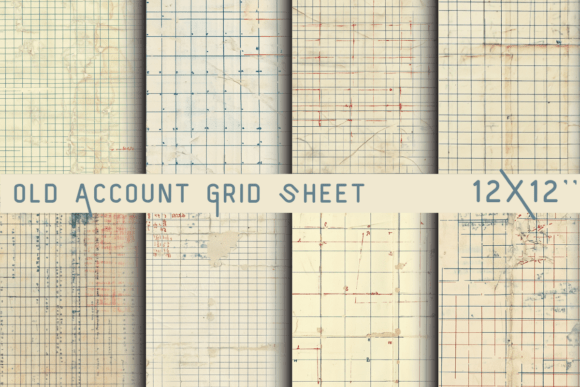
There's a particular quality to old financial records that feels both authoritative and deeply personal. The structured columns, the faded ink, the careful handwritten entries—they tell a story of diligence, commerce, and the passage of time. The Old Account Grid Sheet collection captures this exact aesthetic, offering designers and creatives a direct portal to that archival, vintage office atmosphere. This isn't just a set of patterns; it's a toolkit for building projects with inherent history and texture.
Understanding the Vintage Ledger Aesthetic
At its core, the Old Account Grid Sheet digital pack provides 12 high-resolution designs that mimic the look of aged accounting documents. Each 12" x 12" (3600 × 3600 px) page is a 300 DPI PNG file, ensuring crisp, professional print quality for any application. The visual language is unmistakable: think structured grids for debits and credits, vertical and horizontal ruling lines, faded column headings, and the subtle, uneven texture of antique paper. The color palette is deliberately muted—faded beige, sepia brown, muted grey, ink black, and aged white—creating a cohesive, non-transparent background that feels authentic rather than digitally perfect.
The personality of these sheets is one of quiet authority and nostalgia. They evoke the meticulous record-keeping of past centuries, where every transaction was handwritten in leather-bound ledgers. This aesthetic carries a sense of legitimacy, permanence, and meticulous care. For modern projects, this translates into designs that feel grounded, trustworthy, and rich with narrative potential. It’s a style that works exceptionally well when you want to avoid the sterile, overly polished look of contemporary digital design and instead inject warmth and character.
Practical Applications: Where This Background Shines
The versatility of the Old Account Grid Sheet is one of its greatest strengths. Its applications span from deeply personal crafts to professional commercial projects.
- Junk Journals & Scrapbooking: This is the most natural home for these backgrounds. They serve as perfect base layers for vintage-themed pages, providing structure for photos, ephemera, and handwritten journaling. The grids can guide layouts, while the aged paper texture adds instant depth.
- Finance-Themed Branding & Marketing: For businesses in accounting, consulting, fintech, or vintage-inspired retail, these backgrounds offer a unique branding asset. Use them subtly in website hero sections, social media post templates, or presentation slides to reinforce a brand identity built on trust, history, and solidity. They pair surprisingly well with clean sans serif fonts for a modern contrast.
- Editorial & Publishing Design: Book designers can use these sheets as chapter dividers or section backgrounds in non-fiction works, especially those dealing with history, business, or economics. For editorial design in magazines, they can create compelling feature layouts with a vintage financial twist.
- Digital & Print Products: Entrepreneurs and content creators can incorporate these backgrounds into digital planners, printable stationery sets, or educational materials about financial literacy. The high-resolution files ensure they look sharp both on screen and in print.
- DIY Crafts & Ephemera: Beyond journals, crafters can use them to create custom tags, labels, cards, and mixed-media art projects. The opaque nature of the backgrounds makes them ideal for layering without show-through issues.
When selecting a background from the pack, consider the specific project's mood. A sheet with heavier grid lines and more pronounced accounting columns might be perfect for a corporate report cover, while a page with fainter grids and more visible paper aging might be better for a nostalgic greeting card.
Integrating with Modern Typography and Design Assets
The key to using the Old Account Grid Sheet effectively in contemporary design is thoughtful pairing. This is where understanding font pairing becomes crucial. The vintage ledger aesthetic is a strong display font in itself—busy, textured, and full of character. Therefore, it demands a complementary typeface that provides clarity and contrast.
For headlines and key text, a clean, geometric sans serif font often works beautifully. Its simplicity and modernity cut through the visual noise of the background, ensuring readability while creating a dynamic tension between old and new. Think of a bold, uppercase sans serif for a project title placed over a faded grid. Alternatively, a refined serif font with good x-height can also work, especially one with a slightly condensed or transitional style, maintaining the classic feel but with better legibility.
Avoid pairing these backgrounds with overly ornate script fonts or highly detailed handwritten fonts. The combination can become visually cluttered and difficult to read. The goal is to let the background texture support the message, not compete with the letterforms. Use the background as a foundational design asset, and build your typographic hierarchy on top of it with restraint.
Evaluating and Implementing the Collection
Before diving into a project, take time to evaluate the pack. With 12 different designs, you have variety in grid density, paper aging, and ink fading. Some sheets may have more pronounced antique paper textures, while others focus on the clarity of the accounting columns. Review each page to understand its unique character.
A practical step is to test your chosen background with your primary typeface at the intended scale. Place a text block over it and assess the visual hierarchy. Can you easily read the body copy? Does the headline stand out? If the background is too busy, consider using it in smaller areas—like a sidebar, a footer, or behind a photo—rather than as a full-page bleed. You can also apply a slight overlay of color or a semi-transparent layer to mute the background further, improving readability without losing the texture.
From a technical standpoint, the PNG format with 300 DPI and the substantial file sizes (8–18 MB per page) are suited for high-quality output. This makes them ideal for print-on-demand services, large-format printing, and detailed digital work. Always check the licensing terms if you plan to use the designs in commercial products for sale, though such packs are typically offered with a commercial font license that allows for broad use.
Ultimately, the Old Account Grid Sheet collection is more than just a set of design assets. It's a bridge between eras, allowing you to infuse modern projects with the gravitas and charm of historical record-keeping. By using it judiciously and pairing it with the right typography, you can create work that feels both timeless and intentional, connecting with an audience that appreciates depth, story, and authentic brand identity.