Alphabet Tracing Activity Book for Kids: A Designer's Toolkit for Early Learning
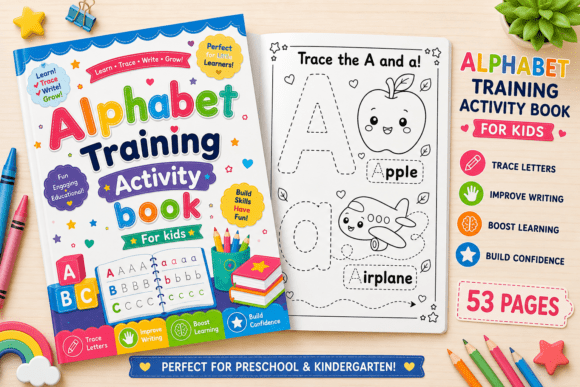
When I first encountered the Alphabet Tracing Activity Book for Kids from IKHLAS ARTISTRY, I saw more than just a set of printable pages. I saw a thoughtfully crafted design asset with a clear purpose. As someone who works in creative strategy, I appreciate tools that understand their audience. This isn't a generic font download; it's a specialized resource engineered for a specific, high-stakes task: teaching children to write. The visual character is intentionally simple, clean, and friendly. The letterforms are open and uncomplicated, designed to guide a small hand without causing confusion. There's a warmth to it, a gentle personality that avoids the sterile feel of some educational materials, making the learning process feel like play.
Practical Applications Beyond the Classroom
The primary use case is obvious: homeschooling parents and preschool teachers will find this activity book invaluable. The 53-page PDF, with its 8.5″ x 11″ pages and 300 DPI PNG images, is print-ready for immediate use. However, the utility of this asset extends into several professional domains I regularly navigate. For a brand identity project focused on children's products, this typeface could inform the visual language of a logo, packaging, or website, ensuring the brand feels approachable and trustworthy to both parents and kids. In editorial design, these tracing pages could be adapted into engaging worksheets for a parenting magazine or a blog post about early childhood education, adding tangible value for the reader. Even social media graphics for educational influencers or toy brands could use these clean letterforms to create visually consistent, instructive content that stands out in a feed.
The real-world value lies in its specificity. It solves a problem. You're not just getting a creative font; you're getting a complete learning system. The inclusion of both uppercase and lowercase letters, paired with cute objects for association, demonstrates an understanding of pedagogical design. For a content creator or blogger in the parenting niche, this is a ready-made lead magnet or a valuable freebie for your audience. A small business owner selling educational supplies could use these pages as a sample to demonstrate product quality. The commercial font aspect is clear—it's a product designed to be used, printed, and shared, with licensing that supports these common applications.
Design Considerations and Effective Pairings
Evaluating its fit for a project requires considering its strengths. This is a display font in function, meant for headlines and large-scale application where its guiding lines are visible. Its readability is paramount; the letters are spaced generously to avoid crowding, a crucial feature for its intended users. In terms of visual hierarchy, it should be used as the primary instructional typeface, not for body text. Imagine a children's book cover where the title uses a playful sans serif font or a handwritten font, and the subtitle or interior activities use this tracing typeface to signal the interactive element.
Testing font pairings is straightforward. It harmonizes with other simple, friendly typefaces. A rounded sans serif font like Nunito or Poppins works well for accompanying text, maintaining clarity without competing. For a more whimsical feel, pairing it with a subtle script font for decorative elements can add charm, but this should be used sparingly to avoid visual clutter. The goal is to maintain the modern typography principle of clean communication. The style itself is a form of serif font—not in the traditional sense with feet, but in its structured, guiding nature—making it a unique hybrid in the typographic landscape.
Strategic Integration for Maximum Impact
For professionals like marketers and entrepreneurs, the key is leveraging its inherent professionalism and focus. Using this asset signals attention to detail and a commitment to quality user experience. In packaging design for an educational kit, incorporating these tracing elements directly onto the product can enhance its perceived value and utility. For a designer creating a suite of materials for a client in the education sector, this book provides a cohesive starting point for developing a full visual system. The consistency of the letterforms across all 53 pages builds brand recognition for the educational product itself.
When choosing to incorporate this asset, think about the end-user's journey. A parent printing these pages needs them to be crisp, easy to follow, and engaging for their child. The design assets provided, including multiple file formats, show a respect for the creator's workflow. My practical recommendation is to use the high-resolution PNGs for any digital adaptation where you need to isolate letters, and the PDF for direct printing. Always review the included pages to ensure the sequence and style align with your project's educational philosophy. Ultimately, the Alphabet Tracing Activity Book for Kids succeeds because it prioritizes function and joy in equal measure, a balance that any creative professional can appreciate and apply. It’s a premium resource that delivers clear, tangible results.